
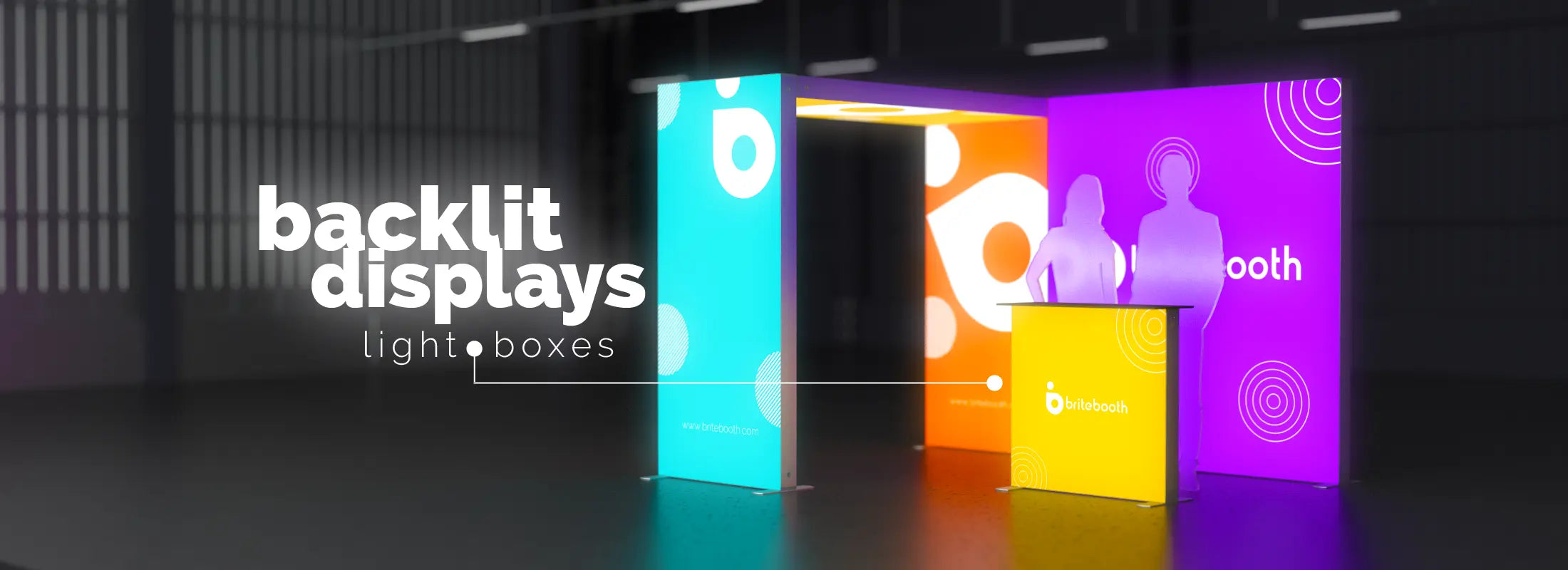
Silicone Edge Graphics (SEG) fabric is the graphic system behind most of BriteBooth's backlit displays. Here's what it actually is, how it's made, and how to install it correctly.
What SEG fabric is
SEG fabric is a dye-sublimated polyester print with a thin silicone strip sewn continuously around its entire perimeter. That silicone strip is the key feature: it presses into a recessed groove running around the inside of the display frame, and as it locks in, it pulls the fabric drum-tight in every direction — the result is a flat, seamless graphic surface with no visible frame edge, no grommets, and no sag.
How it's different from older display fabric
Before SEG became standard, tension-fabric graphics typically used pole pockets or grommets, which hang the fabric rather than tensioning it into a frame channel — fine for a basic banner stand, but prone to visible slack and movement. SEG's gasket-style edge is a mechanical improvement: once pressed in, it stays tensioned for the life of the graphic, not just the first setup.
Where BriteBooth uses SEG
- FrameBright / SEGO: SEG is the core graphic system across the entire line, from the $716 banner stand to the largest arch configurations
- Casonara: uses SEG wrapped around a 360° illuminated frame, so the silicone edge locks in on front and side panels alike
- Blaze: freestanding SEG light boxes with the same push-fit edge system
BriteBooth's WaveLight line uses a related but distinct approach — a zippered "pillowcase" fabric that slides over the frame rather than pressing into a channel — so it's worth knowing which system your display uses before ordering replacement graphics.
Installing SEG fabric
- Prepare the graphic: fold the silicone edge slightly before inserting it into the frame channel, to avoid stressing the seam
- Secure the corners and midpoints first: anchor the fabric at the corners and midpoints of the frame before working the rest of the edge in — this keeps tension even and prevents overstretching any one section
- Press in the remaining edge: work any loose sections into the groove, finishing with a flat, wrinkle-free surface
For a full artwork prep walkthrough — templates, safe areas, resolution, and color — see How to Design Artwork for a Backlit Display.
Why SEG pairs so well with backlighting
Even tension is what makes backlighting look clean: a loose or wrinkled graphic creates visible shadows and uneven brightness once lit from behind, while a properly tensioned SEG surface transmits light evenly across the whole panel. Combined with dye-sublimation printing — which fuses ink directly into the polyester fibers rather than sitting on top of them — SEG graphics hold color and clarity even under sustained LED illumination.
Reusing the frame, replacing the graphic
Because SEG is a swap-in, swap-out system, the aluminum frame and LED lighting are a one-time purchase — when your campaign or branding changes, you only need a new graphic panel, not a new display. Browse replacement graphics by display family to match your existing frame.
Share:
Illuminate Your Trade Show Experience with Backlit Displays
Maximizing Trade Show Impact with a Backlit Booth